
Ian Paul
Hope is central to Christian understanding, and not simply because of St. Paul’s summary in 1 Cor 13 of “faith, hope and love.” Most would recognise the primacy of faith: we are invited to put out trust in God in light of his faithfulness to us. And of course love of God and of others fulfills the greatest commandment. But hope sits in the middle, since it represents the most important reality of Christian understanding: that we long for a better future based on our experience of a better present as “God’s love is poured into our hearts by his Holy Spirit” (Rom 5:5).
Christian faith is not, as Bertrand Russell parodied it, believing in things for which there is no evidence. We hope for the future based on something real in the present. But we do not, contrary to those who preach a gospel of unlimited blessing and prosperity, yet see that future fulfilled. What we see now points us to what we do not yet see, but believe confidently we will.
But where does the Apocalypse, the Book of Revelation, fit in with this? There are two immediate problems. The first is that the word “hope” occurs nowhere in its text. But “hope” as a concept does not appear in the Gospels either, only in the letters in the New Testament. That is because the letters talk of it, expound it, and exhort us to live by it. By contrast, the Gospels and Revelation embody it in their narratives—though in rather different ways.
That highlights the second problem: most Westerners don’t think Revelation, with all its violence and catastrophic judgements, looks very hopeful at all, even though it has been a text which has sustained generations of Christian readers in contexts very different from our own.
But Revelation sits within the covers of our Bible, not outside it, and has therefore been judged to be part of the apostolic message of hope articulated in the other parts of the New Testament—and careful reading of the text confirms that this is the case, even though (like other sections of the Bible) it has its own distinctive perspective.
Dimensions of Hope in Revelation
1. Personal Hope: “I was on the island of Patmos” (Rev 1:9)
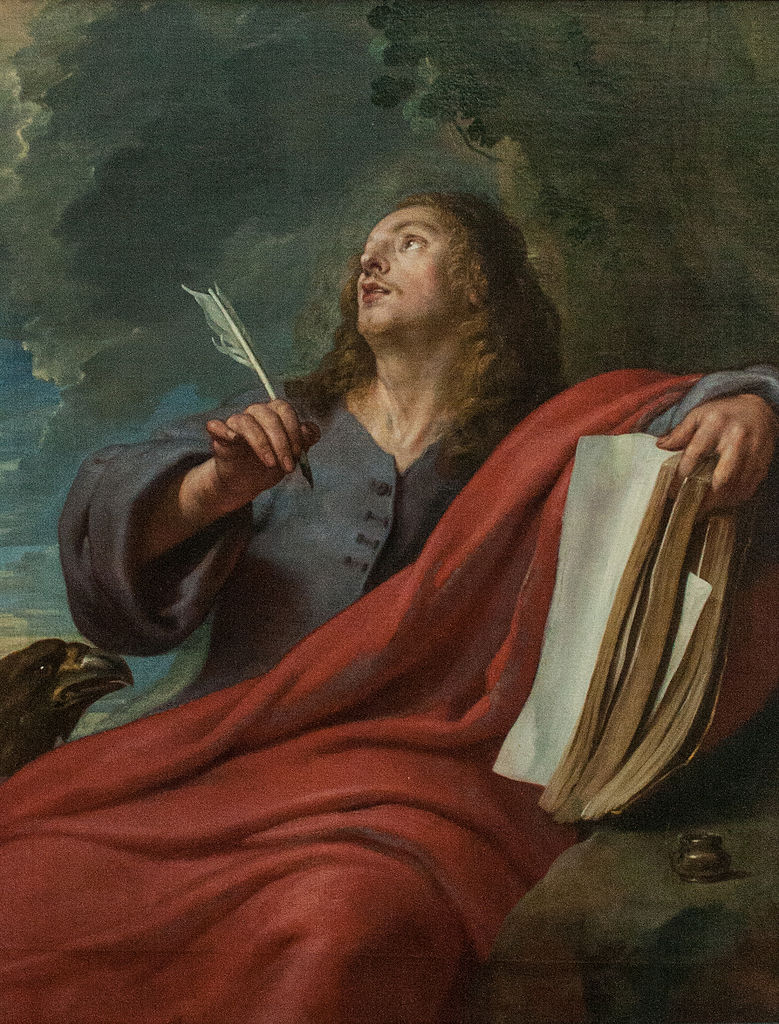
One of the most striking things about the Book of Revelation is that it is expressed as a very particular form of personal testimony. Other contemporary apocalypses talk of a personal journey or experience of revelatory vision—but universally on the part of some great prophet from the past. By contrast, Revelation is presented as the experience of someone who seems to be known to his readers—and makes his personal situation very clear. He locates himself spatially (“on Patmos”), temporally (“on the Lord’s day”) and spiritually (“in the Spirit”; the Greek text uses ‘in’ for all three of these factors). John is telling both his first readers and us that the sights and sounds of the hope of God’s victory that he is about to share are ones that he knows of personally. We cannot talk theologically about things that are not meaningful personally. We cannot share what we do not know as a reality for ourselves.
2. Communal Hope: “I know your deeds” (ergoi, Rev 2:2)
One of the perennial questions asked of Revelation is whether it is a message of comfort for those who are being challenged in their faith, or a message of challenge for those who are complacent and compromised in their faith. Even a cursory glance through the messages to the seven assemblies in the cities to whom John writes will find plenty of challenge to complacency! The messages are not dogmatically communitarian, in that the fault lines of faithfulness versus faithlessness appear to run as much through the communities as between them and the wider population who do not share their faith. Individuals within the “churches” need to make decisions about where their loyalties lie. And yet, in the end, the messages are offered to the communities as a whole. Our hope is personal, but we are not merely to be collections of individuals of hope. Rather, we are called to be communities of hope, living out the possibility of a new future in our corporate lives together as much as in our individual witness.
3. Transcendent Hope: “Before me was a throne…” (Rev 4:2)
The narrative of Revelation makes a particular use of space, appearing to move in turn from an earthly perspective to a heavenly one and back again repeatedly throughout the book. But the separation of these spaces is not as clear as it appears. For example, John sees the “earthly” plagues unleashed in chapter 6 whilst remaining in his heavenly vantage point. And (as with the Lord’s Prayer) the direction of travel is for heaven (in the form of the New Jerusalem) to come down to earth, not the other way around.
The image of the throne, introduced in chapter 4 and representing God’s kingly rule, is a central motif—established in heaven, but with profound implications for earth. It represents a hope that draws extensively on themes from the canonical Old Testament—God as king, the rainbow of hope from the flood, the sights and sounds of the encounter at Sinai—but that also draws on ideas from the Roman Imperial cult. God is the ultimate emperor, and it is his kingdom—and not any human empire—which offers the real hope for peace and prosperity. We cannot save ourselves but can only look to the transcendent offer of the God of hope.
4. Christological Hope: “I saw a lamb standing…” (Rev 5:6)
We are so used to the narrative of heavenly worship in Rev 4–5—and so used to the language of the “lamb standing as though slain” through Christian hymnody, art and devotion—that we miss how shocking and surprising this image is. It is not only inherently contradictory (“standing” denoting life, whilst having the appearance of being slaughtered)—it is also quite unexpected. We have already been given a description of Jesus in his risen glory in chapter 1, and this new image is introduced without explanation or any connection. And there is already One on the throne, with no indication there is space for another to join him!
But this surprising image communicates a key conviction: that the hope found in Revelation is centred on the atoning work of Jesus’ death and resurrection, by which humanity from “every tribe, language, people and nation” might have the chance to encounter this redeeming hope for themselves. And the placing of the lamb on the throne with God sets off a convergence of the identity of Jesus with the Father that forms the foundation for later Trinitarian expression of the nature of God.
5. Hope in the Face of Cosmic Catastrophe: “Its rider was named Death” (Rev 6:8)
With three “sequences of seven” in Rev 6 (the opening of the seven seals), Rev 8–9 (the blowing of the seven trumpets), and Rev 16 (the pouring of the seven bowls), we have some of the most powerful and evocative images of the book. The image of the “four horsemen of the apocalypse” as harbingers of doom is well known amongst people who have never opened their Bibles. These series continue the structural moves in Revelation, from the heavenly to the earthly—but the key question for interpretation is whether these are envisaged as past, present or future. The grammar doesn’t help us, as most of Revelation, being vision (and audition) report,1 is written in the past tense.
But the things described here, especially the things associated with the four horsemen, would have been very familiar to anyone living in the first century—as they have been to most people in most ages through history. If we are aware of the apocalyptic state of the world, plagued by violence, conflict, environmental catastrophe, and economic inequality, then now is the time to reach for apocalyptic hope.
6. Hope Embodied: “And I saw a great multitude” (Rev 7:9)
The saints under the altar cry out “How long O Lord?”, pleading with God to provide an answer to the state of the world. And the first part of God’s answer, offered in the “interlude” between the sixth and seventh seals, is neither an abstract theological answer nor a detached action of judgement but the personal intervention of raising up a faithful people who will testify to the world.
John redeploys the image from Ezekiel 9 of a faithful remnant preserved from the judgement of Jerusalem and reconfigures it to described a faithful people preserved from the judgement of the world. The careful counting John hears indicates a census being taken to establish the fighting strength (cf. Num 1) of this disciplined spiritual army. The striking apparel that John sees shows that this uncountable people from every nation has come through (not been extracted from) suffering and have been shaped by it. And he sees and hears that they are caught up in praise not merely for the past or the present of God’s acts, but for the future of God’s deliverance.
God’s immediate answer to a world of cosmic catastrophe is found in you and me, as we are formed in spiritual discipline, embrace the suffering of the world with empathy, but overflow with eschatological anticipation that the best is yet to be. If we have seen in Rev 2–3 that “judgement begins with the house of God” (1 Peter 4:17), that is because we are to be the bearers of divine hope which our world so badly needs.
7. The Paradox of Hope: “Sweet in my mouth, bitter in my stomach” (Rev 10:10)
After returning to images of earthly catastrophe with the second sequence of seven (trumpets), we have a second interlude, focussing again on God’s forming of his people. Ezekiel was given a scroll to eat, which tasted sweet, and he was to prophesy a message of hope to God’s people (Ezek 2). But John’s commission in Rev 10 is different. His scroll is sweet in his mouth, but bitter in his stomach: he is to prophesy not just to those who will accept his message of hope, but to the nations who will reject it.
The message will bring both joy and pain, to those who hear it and to the one who proclaims it. The second half of this interlude shifts (in chapter 11) from John’s prophetic ministry to the prophetic ministry of the whole people of God—all the followers of Jesus—who exercise the ministry of Moses and Elijah before a hostile world. Their testimony does bring repentance, but it also brings opposition, so that they experience death at the hands of others, though resurrection life by the power of God.
8. Hope Secured and Tested: “Rejoice, you heavens…but woe to the earth” (Rev 12:12)
Commentators on Revelation mostly agree on two observations about chapter 12: first, that it is the central, pivotal chapter in the book, and second, that it is rather odd and difficult to make sense of! It is of central importance not merely because it comes at the half-way point of the 22 chapters. but because there is a solemn change of tone and language, where the previous repetitions of “and I saw…” are displaced by “And a great sign appeared in heaven…” What follows is the longest uninterrupted narrative section in the book.2
The reason why Rev 12 is so difficult to make sense of for the ordinary reader is that the main narrative of vv. 1–6, picked up in vv. 13–17, is structured on the myth of Leto, Apollo and Python. This is itself a tale of hope, in which Apollo and Artemis are born of the union of Leto and Zeus, and Apollo, rather than being consumed at birth by Python, quickly grows up and defeats the chaos monster. It was a myth adopted by successive emperors who cast themselves in the role of Apollo and thereby embodied in their imperial power the hope of the end to the chaos of the world which was described graphically in chapter 6.
But John subverts and inverts such rival tales of hope, and Jesus as the longed-for anointed king of Ps 2 displaces the emperor as the Apollo figure, whilst the Empire is revealed not as the enemy of but the agent for the primeval chaos monster known to us as Satan.
John is clear that it is the “blood of the lamb,” Jesus’ sacrificial death on the cross, which secures hope (Rev 12:11). It is this which earlier chapters have anticipated and adumbrated, and from which successive chapters flow. But this hope is expressed in their particular contexts by those who “hold fast to the testimony of Jesus” (Rev 12:11, 17), and it is such testifiers (witnesses) who become the target for the ferocious opposition of Satan and his henchmen—the beast from the land and the beast from the sea (later described as the false prophet).
9. The Hope of Judgement: “He swung his sickle over the earth” (Rev 14:16)
Now that the security of hope has been revealed, the text unfolds its further visions until we reach the climax of hope in Rev 21. But along the way, it incorporates judgement as a dimension of hope that affluent cultures have always struggled with—but those living with the threat or the reality of oppression have had no difficulty in understanding.
Chapter 14 begins with a vision of God’s people which contrasts sharply with the vision in the previous chapter. There, they are trampled and oppressed, but here they are serene and secure. The imagery comes from the Old Testament narratives, and portrays a people in the presence of God and caught up with the praises of God, marked by a sevenfold virtue (count the attributes in Rev 14:4–5!) which have been formed in them by the seven-fold Spirit (Rev 4:5; 5:6; cf. LXX Isa 11).
But juxtaposed with this seven-virtued people is a seven-sickled judgement—the word for “sickle” comes seven times in the chapter, expressing two different judgements enacted by two parallel harvests. The language of Rev 14:14 picks up the imagery of the grain harvest, which is consistently deployed by Jesus as a positive image of the gathering of God’s people to God, so that in Paul (e.g., Rom 8:23; 2 Thess 2:13; cf. Jas 1:18; Rev 14:4) those who believe now are the first part of that harvest which has ripened in anticipation of the end of the age. But the imagery of Rev 14:17–20 is Old Testament imagery of God’s judgement on those who have opposed him. The two harvests are offered as two swings of the same sickle—that of the justice and judgement of God.
If we cry to God for the end to injustice, abuse, and oppression, what are we praying for in relation to oppressors, if not that God will hold them to account? As the third and final “seven,” the seven bowls, are poured out, the proclamation of God’s justice (Rev 15:3–4) becomes an insistent refrain.
10. Resistance to Hope: “They refused to repent…” (Rev 16:9)
Along with the weaving in of the theme of justice in God’s judgements, this third sequence of “seven” is distinct from the previous two in its shape and its vocabulary. It still has echoes of the 4 + 3 structure of the previous two, with the focus of the first four being the natural world and the last three being more specifically directed, but it loses the interlude between 6 and 7 that we have seen before. The impact of the bowls has a stronger reminiscence to the plagues of Egypt, not least in their being specifically directed against those who choose loyalty to the beast and its kingdom (empire). This makes prominent the question of repentance. Just as Pharaoh’s heart was hardened, so these plagues afflict those who “refuse to repent” and recognise the sovereignty of God (Rev 16:9).
In case we are tempted to think that all this is part of John’s vivid apocalyptic imagination and unconnected with “gentle Jesus, meek and mild,” we are connected in Rev 16:15 directly with Jesus’ parables about the sudden return of the Son of Man and the need to be properly clothed (see the eschatological parables in Matt 24–25), which Paul also describes using “thief” language (1 Thess 5:2). And the visions of hope of the end of this age in Rev 16:20 start to pick up the language of Isaiah’s eschatology, with islands fleeing and a new heavens and earth anticipated, language which is revisited in chapter 21. The hope of justice and judgement is both Christological and canonical.
11. Hope against Empire: “Fallen is Babylon the Great!” (Rev 18:2)
Another change of gear meets us in Rev 17–18. Despite our expectations set up in the Apocalypse’s first verse of an interpreting angel, this is the first time John is accompanied by one. Just as Ezekiel was carried in the Spirit into the wilderness, so is John, but he sees a rather different vision. Once again, we see very specific references to the indulgence of the Roman Empire of the first century, its violence and thirst for blood, and the oppression that results from its violence and consumption—all the while making some very rich by its conquest and trade. The list of 28 cargoes in Rev 18:12–13 would be recognised by any wealthy Roman as the marks of high society”—John even goes to the trouble of using the technical term for the four-wheeled carriages beloved by the wealthy.
But, as he has done throughout his vision report, John describes these particular things using generic and biblical language, here adapting the denunciation of Tyre’s imperial power from Ezekiel 27. This particular empire is unique—but it is also the same as every other empire of human creation. Economic exploitation, environmental destruction, centralisation of power, and dehumanisation of those who are thereby enslaved has marked every human empire that has ever been, and Rome is no different.
The hope for the end of all human empires/kingdoms is found only in the empire/kingdom of God. And every celebration of God’s justice in judgement of those who have been oppressors is accompanied by the reminder of the free gift of redemption and life given to all those who will come out of empire and renounce the indulgence and oppression of imperial power.
12. Hope of Final Justice: “He treads the winepress of the fury of the wrath of God” (Rev 19:15)
The final vision sequence is comprised of seven unnumbered visions, each beginning “And I saw…” (19:11, 17, 19; 20:1, 4, 11; 21:1). Some schemes of interpretation see these as sequential and chronological—but they cannot make literal sense when read in this way, and John’s circular movements in which he constantly revisits and expands on things mentioned earlier should warn us against such a reading.
Instead, we are offered a series of insights into what the return of Jesus and the final victory of God means in all its richness and diversity. It means the final triumph of Jesus and the completion of all that he began to do in his earthly ministry. It means the decisive defeat of earthly power structures that serve the purposes of Satan. It means the vindication of the saints, and the visible justification of those who were visibly humiliated. It means the judgement of God, revealing the reality of every life that has been lived. It means the final binding and triumph over Satan, of which Roman “triumphs” are but a poor imitation and anticipation. And it means the renewal of the whole created order.
These visions include both clarity and ambiguity. There are some tensions which are never easy to resolve, in particular the reality of God’s judgement and his mercy in renewal. This is expressed most starkly by the fate of the “kings of the earth” who are defeated in Rev 19:19 and yet bring their glory into the new Jerusalem in Rev 21:24. Will God destroy those who are opposed to him, or will he redeem and restore them? Yes he will.
13. Hope of Cosmic Renewal: “Then I saw a new heaven and a new earth” (Rev 21:1)
The final vision of Rev 21 completes the seven unnumbered visions from chapter 19 with John’s seventh and final use of ‘And I saw. . . .’ This vision not only ends the sequence but offers a clear counterpoint to the vision of the empire as the whore of Babylon in Rev 17. Where she had gained her wealth, her sumptuous clothing, her gems, and her pearls through indulgence, oppression, and greed, the city which is the bride of the Lamb is adorned with the splendour that comes as the gift of God.
As the vision unfolds, we see the convergence of promises from throughout the Old Testament, not least in the vision of Zion being lifted up and drawing all the nations to herself. The hope of the people of God for their renewal and their freedom from oppression expands until it includes the restoration of the whole world, and the redemption of people “from every tribe, language, people and nation.”
John does most of his theology through the mathematics of architecture. This remarkable city is large enough to encompass the whole of the Roman Empire and incorporate all its people. And where in the Old Testament narrative the world is differentiated into graduated spaces of the mundane and the holy—from the world as a whole to the land of Israel, the city of Jerusalem, the temple courts, the place of sacrifice, and the holy of holies, each stage bringing us closer to the presence of God—now the whole world is one undifferentiated space of the holy of holies, expressed by the city being a cube. And in this undifferentiated space is an undifferentiated holy people, every one fulfilling God’s plan for his people to be a nation of (high) priests, serving in his presence.
14. Hope and Faithful Testimony: “Do not seal up the words of this prophecy” (Rev 22:10)
As John completes his vision report, there is a striking shift in focus. Just as John has been unconcerned with the role of angels—wheeling them onstage and shooing them off again—in order for us to focus on the message and not on the angels themselves, so now he shifts from an emphasis on his visionary experience to the importance of the words he has used in his vision report (which in fact is nearly 50% a report of things he has heard rather than what he has seen).
The final verses bear a strong resemblance to the closing words of Paul’s letters, and particularly 1 Corinthians. Paul takes up the pen from the hand of the amanuensis, and signs his own name as the mark of authenticity, even while the amanuensis also gives his own greeting. And in Rev 22:16, Jesus does the same, authenticating the message that he has given John.
Just as Jesus has been the faithful witness, even to the point of death, so he has invited John to be a faithful witness to him. And John now passes us his testimony and asks us, his readers, to be faithful witnesses to the message that he has faithfully testified to us.
In case we are not clear of the connection, he once again does his theology by mathematics, with the terms “Jesus,” “the saints,” and “the Spirit” all occurring 14 times, 14 being the product of 2 (the number of reliable witness in Deuteronomy 17) and 7 being the number of completion. Will we be faithful witnesses to the hope that is in Jesus in the particulars of our context, as John was in his?
This article is adapted from two pieces (Part One and Part Two) that originally appeared at Psephizo.
Ian Paul (PhD, St. John’s College, Nottingham) is the Managing Editor of Grove Books Ltd and Associate Minister of St. Nic’s Church, Nottingham. He serves as an Adjunct Professor at Fuller Theological Seminary and writes regularly at Psephizo. He is the author of Revelation (IVP, 2018) in the Tyndale New Testament Commentary series.
Image: Gaspar de Crayer, St. John on Patmos
- See my “Is Revelation a Vision—or an Audition?”[↩]
- Fewer commentators notice the way that John holds together chapters 11 and 12 across the sharp divide of Rev 12:1 by use of the threefold phrase “time, times and half a time,” “42 months,” and “1260 days,” equivalent time periods which are referenced only in these two chapters.[↩]