
Trevor Laurence
The following is the audio and edited transcript of a message on Deuteronomy 4 from Trevor Laurence, delivered at Trinity Church (PCA) on September 8, 2024.
Deuteronomy 4 is about obedience, and that is not a topic we tend to enjoy.
We’re twenty-first century Westerners, so we’re instinctive individualists—we’ve been trained to live how we choose, blaze our own trail, and always let our conscience be our guide—so obeying someone outside of ourselves feels like a restriction of the freedom we need to be fully human, to truly live. We’re Americans: our founding story is rooted in a declaration of independence. We’ve been formed in this powerful cultural narrative to assume that throwing off authority and exercising self-rule is progress, so the idea of obedience can rub against our cultural sense of who we are and our inherited values. And we’re human, we’re sinners, we’re proud. We desperately want to assert our autonomy as a demonstration of power, so obedience feels like weakness. It’s an admission that someone’s over us who may know better than we do.
But I think there’s another we reason we naturally recoil against the call to obedience: we’re scared. When God gives us a command, often what stirs inside of us is a reflexive fear that God doesn’t have our good at heart, that he doesn’t really love us, that he doesn’t desire our delight. Maybe he’s just using us for his own selfish gain, manipulating us to benefit himself, controlling us to meet some deep personal need. And when that fear takes root, you might rebel against his call to you—or you might comply, but with an obedience that’s shrouded in drudgery and the begrudging resignation that you’re missing out on the good life, that God’s holding out on you.
But that’s not the Christian vision of obedience, because that’s not the Christian vision of God. If you’ll let it, the Bible will turn your instinctive conceptions upside-down. My hope today is that, as we listen to Deuteronomy 4 together, we’ll taste and see that the Lord is good—and that his commands are good—so that we can grow to gladly obey his word and worship his name. I want us to see three things: the joy of obedience, the fuel of obedience, and the mission of obedience.
The Joy of Obedience
Our fears and suspicions about obedience are ultimately rooted in a too-tiny conception of God.
We’ve said this before, but it needs to be repeated because it’s so utterly liberating: God doesn’t need you. And he doesn’t need your obedience. That’s such good news! The Triune God lacks nothing, possesses everything, and is in his very being eternally full of perfect love and maximal joy. Your obedience cannot add to him, and your disobedience cannot take away from him.
So when God commands you, he’s not doing it to satisfy some unmet need in his internal life—his commands are not for him. Who are they for? They’re for you.
This is the revolution that comes with the promise of an eternally complete God. This God who has no need gives his law, calls for obedience, and demands our worship for our joy. He speaks—“Love God and love your neighbor”—and bids us listen so that we’ll be spared from making a trainwreck of our lives through distorted and unsustainable ways of living. He gives his Ten Commandments and bids us obey so that we’ll flourish and live beautifully and experience what it means to be fully alive—filled up with abundant life—in joyful, heart-satisfying, intimate communion with God. His law is for us, not for him.
I often repeat a phrase to my children, but it’s equally true for all of us: disobedience robs us of our joy. What does that mean? It means that rebellion and sin against God always introduce pain and diminish our ability to enter into the peace and delight and wholeness God desires for us.
If you live by lies, chronically breaking trust, you’ll become increasingly isolated and devoid of meaningful relationships. If you commit adultery, you’ll destroy your family and potentially someone else’s, wound your children deeply, and likely find that others begin to hold you with suspicion about whether your public commitments really mean anything. If you always indulge your anger and cut people with your words, you’ll hurt the people closest to you and eventually create a barrier between yourself and others that people are too scared to cross. The relationships you have will be built on fear, and that will make you profoundly alone.
If you build your life on greed, live for money, and hoard your wealth, you’ll discover before too long that you’ve sacrificed everything that matters to acquire something that can’t fill you up. If you give yourself to pornography, you’ll lose yourself in a virtual world, deaden your heart, and train yourself to relate to human beings as sexual objects for your gratification. Your capacity for genuine relationship will be profoundly stunted. If you worship any idol—if you build your life on any false source of meaning, identity, and fullness—you’ll use people to get it, fight people to keep it, and find that your soul is still starving because you were made for more.
Disobedience robs us of our joy at a societal level, too. The death of truth in society makes people profoundly susceptible to misinformation and conspiracy theories, because when truth doesn’t mean anything, nobody knows whom they can trust. A culture of outrage means that people are always at each other’s throats, peace becomes impossible, and the idea of simple dialogue becomes a pipe dream. Governmental corruption destroys public trust and misdirects resources at the expense of the community. Unjust legal systems multiply violence instead of stopping the wicked, protecting the vulnerable, and repairing the harm. Sexual libertinism results in relational chaos, brings waves of children into the world without the stable commitment of a loving family, and fosters a society where images and bodies are exchanged, sold, used, and ultimately discarded.
Though it may be pleasing in the moment, a life governed by idolatry and disobedience to God always brings personal and communal disintegration. But God’s commands illumine the path of joy. After all, he made the world, and he made us, and he knows how life works best. When you really think about it, what kind of life do you want? Don’t you want one suffused with generosity, truthfulness, love, humility, trustworthiness, relational peace, justice, integrity, virtue, and a full heart? That’s what God wants for you too—and that’s why he gives you his commands.
God doesn’t need your obedience. He wants your obedience because he wants your joy. He delights in your obedience because he delights in your delight.
This is the way emotionally healthy parents operate. They teach and command and correct their children not to get some existential need met through what their kids can give them, but in order to lead them into a way of life and character that will yield long-term, sustainable joy for the child’s good. And when emotionally healthy parents are met with disobedience, they don’t prioritize feeling offended, disrespected, deprived, or threatened and react with aggression out of that. Instead, they securely respond with a kind of grief, anger, and action that’s chiefly concerned that the child is rebelliously robbing himself of joy, walking down a road that will yield painful fruit, and disrupting the joyful life of the home for others, too.
Why do I bring that up? Because God is an emotionally healthy Father. Deuteronomy 4 begins this way: “And now, O Israel, listen to the statutes and the rules that I am teaching you, and do them, that you may live.” And it ends this way: “Therefore you shall keep his statutes and his commandments . . . that it may go well with you and with your children after you, and that you may prolong your days in the land that the LORD your God is giving you for all time.”
Ever since the garden of Eden, God’s purpose has been to dwell with his people in a community of love, peace, and joy. Adam and Eve rebelled against the Lord—they believed God was using them, holding out on them, so they looked for joy in disobedience and found instead that their disobedience robbed them of their joy—and God drove them out of his presence. But he didn’t give up on his purpose to live with his people. God rescued Israel out of slavery in Egypt and pitched his tent among them in the tabernacle. And here in Deuteronomy, Israel is on the cusp of entering into a land of abundance where God will make his home with his people. They’re about to march into a renewal of Eden! But the only way for them to truly experience, to truly live in, the love and peace and joy that God desires for them in his land—in his presence—is to listen to his word, trust his voice, obey his command, and worship him alone as the fulfiller of their hearts. Any other way of life will inevitably lead to distortion and fracture and conflict and injustice and violence. And God has no intention of underwriting and propping up an Israelite society that’s defined by wickedness and death. He wants better for them and for the world.
There’s a poetic justice in chapter 4: if Israel serves the gods of nations, God will serve them up to the nations so that they can serve the nations’ gods in the nations’ lands. In a real sense, he’ll let them have what they want. But he won’t let them go on forever bearing his name and living before his face as an unjust and predatory community. He’ll drive them out of the land like Adam out of Eden, but he won’t give up on the goal of dwelling with his people in a community of wholeness. God wants humanity to flourish in the joy of holiness, not to flounder in the brokenness of sin.
Centuries later, the prophet Jeremiah would preach to a floundering Israel. By this point, Israel is filled with idolatry, injustice, and violence, and they’ve even offered their children up to false gods. They’re doing everything Moses cautioned against, so Jeremiah announces that the judgment Moses warned about is coming. God will remove his people from his land and scatter them among the nations whose gods they’ve elected to serve.
But in Jeremiah 7, the Lord says something fascinating: “Is it I whom they provoke? declares the LORD. Is it not themselves, to their own shame?” What’s God saying? He’s saying that their disobedience isn’t really affecting him, depriving him, harming him—he’s not responding to their sin out of hurt pride and self-protection. Their disobedience is destroying them. Their sin is constructing an anti-Eden where the innocent are endangered, where wickedness corrupts everything, where shalom is impossible. That’s why he’ll intervene.
God’s anger at sin isn’t a temper tantrum where he rages like an insecure boss who’s been disrespected and has to prove he’s in charge. He’s not an emotionally needy father who needs to win a power struggle with his child. And his commands aren’t an attempt to fill himself up at our expense. God is eternally full of joy. He takes joy in inviting us into his joy for the sake of our joy. He hates sin because he hates the death that sin brings to his creatures when we try to live apart from him and outside of his design. And he gives us his commands so that we can experience the life of joy we were made for, so that we can taste and see how life works best.
The Fuel of Obedience
In a variety of ways, Deuteronomy 4 hammers home one fundamental point: God is better than whatever else you could give yourself to.
An inescapable feature of human existence is that you’ll always be obeying something. You’ll always be obeying—giving yourself to—the god you worship as you pursue the meaning, fullness, and joy that it offers. You’ll follow the commands of the thing you love the most.
So how can you learn to delight in obeying the word of the Lord? You see him for who he really is. You wake up to the fact that he’s better, more satisfying, more fullness-inducing than everything you’ve ever tried to replace him with.
Throughout this chapter, that’s what Moses seeks to show us. Moses doesn’t just command Israel not to make idols and bow down to them. He shows them that those idols are utterly powerless to give Israel what they’re searching for. Verse 28 describes the idols that might draw Israel away from obeying and worshiping God: “gods of wood and stone, the work of human hands, that neither see, nor hear, nor eat, nor smell.”
What are they? They’re dead. If they can’t see, then they can’t see you in your pain. If they can’t hear, then they can’t hear you when you cry. They can’t care for you at all. And they can’t satisfy the deepest longings of your heart.
A dead thing can’t fill you up with life. Only a Living God can do that. Idols like sex, money, power, and comfort make promises of deep joy and require your obedience in order to achieve it. They call you to organize your life around their demands in order to achieve fullness. But they always leave their worshipers empty because they’re as dead and unresponsive and incapable of keeping their word as the ancient gods of wood and stone.
In contrast to the dead gods, Moses invites us to consider the Lord:
For ask now of the days that are past, which were before you, since the day that God created man on the earth, and ask from one end of heaven to the other, whether such a great thing as this has ever happened or was ever heard of. Did any people ever hear the voice of a god speaking out of the midst of the fire, as you have heard, and still live? Or has any god ever attempted to go and take a nation for himself from the midst of another nation, by trials, by signs, by wonders, and by war, by a mighty hand and an outstretched arm, and by great deeds of terror, all of which the LORD your God did for you in Egypt before your eyes? (vv. 32–34)
Moses journeys from the exodus to the top of Mount Sinai, and he wants to consider: have you ever heard of a God like this? And his point isn’t merely that God is more powerful than any other god. His point is that this more powerful God is at the very same time more loving and gracious, too.
Moses doesn’t describe the exodus as a naked exercise of power over Egypt. He describes it as God taking a nation out of slavery “for himself.” In the power of the exodus, God liberated Israel from oppression so that they could be bound to him in covenant love, so that they could be his and he could be theirs.
Moses doesn’t just highlight the splendor of God’s voice from the fire on Mount Sinai. He highlights God’s mercy: “Did any people ever hear the voice of a god out of the midst of the fire . . . and still live?” When Moses first met the Lord, it was at the burning bush, where the fire burned but the bush wasn’t consumed—and where did that happen? It was at Sinai. And when Israel came to Sinai, the fire of God burned in their midst, and they weren’t consumed. Israel becomes the burning bush—ablaze with the presence of God, yet not destroyed by his power and holiness. Verse 11 says that Sinai’s fire “burned to the heart of heaven.” Heaven touched earth on that mountain, and then God’s fire filled the tabernacle so that heaven could journey with every step of the way.
What’s the point? The point is that the God who topples empires and descends from heaven in flame doesn’t simply do it to show off. He does it because he wants to be with his people. And when you know that kind of power mingled with that kind of love—directed toward you—it will redirect your love in thankfulness to God. It’ll drive out the idols competing for your allegiance, ignite your worship of the Lord, and make you ready to obey his voice—whatever the command. You’ll say with Moses, “The Lord is God; there is no other.” You’ll give your love to him in obedience because you know his love toward you in grace—and because you trust that his commands are a gift of love for you, too.
Dead idols can only take. They make their demands on your life, and they’ll take until they’ve drained you dry. But the Living God—the God who rescues undeserving people and makes his home among them in gracious love—that’s a God who gives.
The fuel for Israel’s obedience was recognition of the supreme goodness of God over every dead rival. But church, we’ve seen God’s power, his love, and his grace revealed even more clearly than Israel at the slopes of Sinai. In Jesus, the glory of God descended to earth not on a mountain but as a man. The fire of God’s glory took on flesh to dwell among us—to see and hear and eat and live with his people. In his ministry, Jesus performed signs and wonders, and with a mighty hand and outstretched arms he died on the cross to defeat the sin and death that held us captive and lead us on a better exodus into resurrection life.
And if that weren’t enough, he poured out his Spirit on us—the fire and cloud of God’s glory has descended on us like Mount Sinai and filled us up like the tabernacle—so that we can know the intimate love and presence of God in the deepest way imaginable.
Moses told Israel that, even though their disobedience would lead to exile, “the Lord your God is a merciful God” who “will not leave you or destroy you or forget [his] covenant.” Jesus is the fulfillment of Deuteronomy 4. Jesus is God’s refusal to leave or destroy or forget the people he loves. He was exiled in death to bring disobedient people back to God and make them new so that they can obey his voice in worship and joy.
So, “ask from one end of heaven to the other, whether such a great thing as this has ever happened or was ever heard of.” And in the love that you find in Jesus, find the fuel to obey him in love.
The Mission of Obedience
We noted earlier that God commands our obedience for our joy. But in Deuteronomy 4, Moses tells Israel: your obedience isn’t just for you. It’s for others, too. The obedience of the people of God—their life of worship, love, and submission to the word of the Lord—is one of the ways we participate in his mission for the world.
From the beginning, God’s mission has been to fill up the world with image-bearers who know him in joy, live in his presence, and experience what it means to be truly human—truly alive—in holy wholeness together. And our obedience is part of that mission, because it has influence in two directions: down and out.
First, our obedience moves down. It impacts subsequent generations. It shapes our children.
Throughout this chapter, Moses calls Israel not only to obey God’s word but to teach it to their children and their children’s children so that they can grow up into the joy of life with God, too. The book of Deuteronomy as a whole is preoccupied with the intergenerational effects of faithfulness and idolatry. Why? Because the loves of our hearts and the trajectories of our lives inevitably preach to and aim our children. Homes, families, and communities are—in God’s design—imagination studios and worship incubators where children learn from parents and other adults what the world is really like and what’s truly worth worshiping and obeying.
What does that mean for us? It means, that as families and as a church, we’re always discipling our children, especially when we aren’t thinking about it. The rhythms, priorities, and practices of our lives teach our children beyond our words what we actually believe is important. The catechesis class is wonderful, but the most powerful catechesis class is our everyday life with our children where we model for them the beauty of repentance, the joy of holiness, the transformative power of the gospel, and delight in the word of the Lord.
Children: God commands you to honor your mother and father because he wants you to pay attention to their lives and receive their good instruction. Watch the way the big people live, because it’s our job to show you that following Jesus is worth it.
Second, our obedience moves out. It bears witness outward to the world.
In verses 6–8, Moses says that Israel’s life of worship and obedience will cause the nations—who are living in all the distortion that idolatry brings—to see the wisdom, the righteousness, and the nearness of God. In other words, the beauty and joy of an obedient life, individually and communally, proclaims to the world that worshiping God brings a better flourishing and a better fullness as the wise justice of God’s law and the soul-satisfying power of his presence are displayed.
Here’s the thing: our neighbors our starving. They’re fighting to find meaning, fullness, and joy without Jesus, but they’re fighting a losing battle. And one of the ways we show them that Jesus is the answer to their hunger is by living in a way that shows them God’s Son is the answer for a full heart and God’s word is the way to a beautiful life.
Tragically, the church has made the same mistake too many times of imitating the worship and ways of the world in an effort to make people like us. But all that does is tell people that God has nothing to offer that they don’t already have. But God calls us to embody and proclaim something new, something distinctive, something the world doesn’t already possess. And we do that with lives that are different, with lives that are joyfully and comprehensively submitted to the word of the Lord and the worship of Jesus.
Obedience to God is an act of love for the world, even if the world doesn’t know it.
Trevor Laurence is the Executive Director of the Cateclesia Institute and the author of Cursing with God: The Imprecatory Psalms and the Ethics of Christian Prayer (Baylor University Press, 2022) and Arise, O Lord: A Christian Guide to Cursing with God (Theopolis Books, 2025).
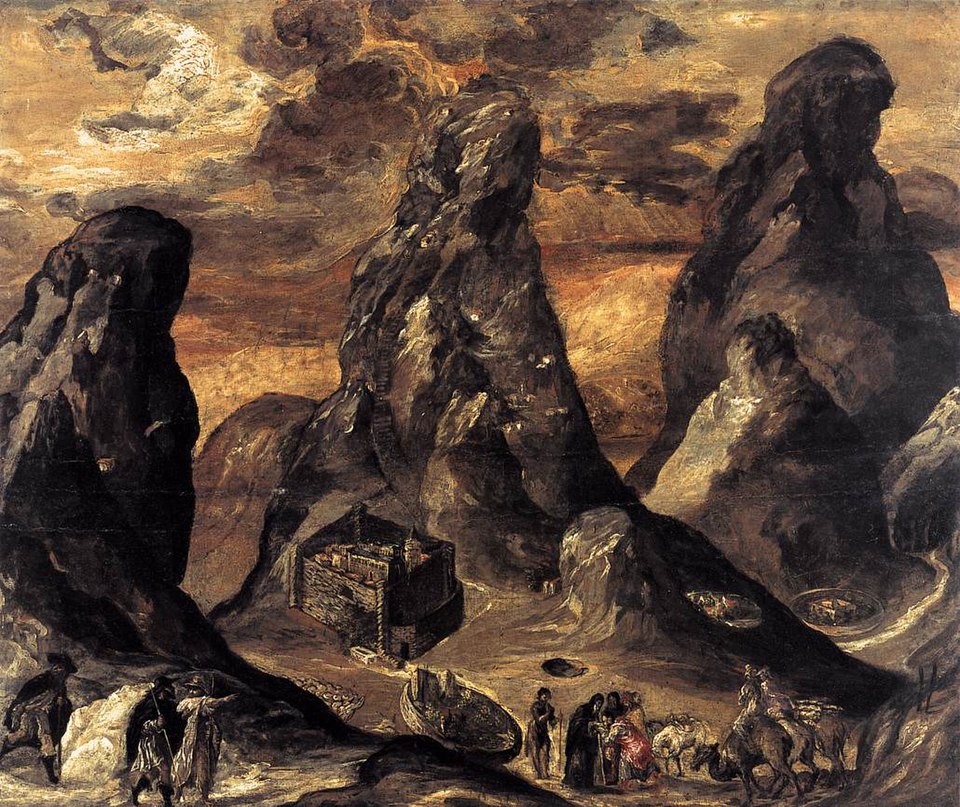
Image: El Greco, Mount Sinai